

-DESIGNING PHASE PROJECT -PROTOTYPING
Connecting seniors with other seniors living in the housing society to lift their happiness, health and also make them interdependent
Roles & Responsibilities
- User Research: Surveys, Interviews, Competitive Analysis, Affinity Mapping
- UX Design: Crazy 8s, Iterative Wireframing, Testing Sessions
- Narrative Storytelling
Project Context
- Individual and team project
- Making society vibrant and lively
Tools Utilised
- Figma
- Sketch
- Whiteboards and Miro
- SimpleMind
Upon returning to Mumbai to live with my parents in a cooperative housing society due to emerging health concerns, I gained first-hand insight into the challenges faced by seniors, both within my family and across the wider community. The society exhibited systemic social fragmentation, with limited opportunities for meaningful interaction among residents. Despite well-defined bylaws governing building operations, tenancy, and legal matters, there was no structured framework to support resident well-being, engagement, or social connectivity, particularly for elderly members.
Community events consistently experienced low participation, highlighting a lack of scalable, accessible mechanisms to foster engagement. Furthermore, the absence of an integrated digital platform for communication, information sharing, and activity coordination compounded isolation and limited opportunities for residents to interact effectively. This presented a clear enterprise-level challenge: to design a centralized, user-centered platform capable of connecting the community, enhancing engagement, and supporting the operational needs of the housing society at scale.
At the outset of the project, clearly defining the target segment was critical. Identifying the most affected group and deeply understanding their lived experiences became the foundation of the research. Listening to residents and uncovering their challenges was the essential first step toward designing meaningful solutions.
To facilitate this, I collaborated with a group of friends and society members to conduct the research and gain deeper insight into the root causes of disengagement within the community. This participatory approach helped surface both emotional and practical barriers faced by residents, particularly senior members.
The project operated under certain constraints, including limited time, situational challenges, and resource availability, as many participants were volunteering while managing other professional and personal commitments. As a result, the scope for multiple iterations was limited. Despite these constraints, the research remained focused on answering a set of critical questions that would directly inform solution design.
Key research questions included:
-
What changes are necessary to improve engagement and participation among society members?
-
Which monetary and non-monetary activities are practical, sustainable, and suitable in terms of frequency for elderly residents?
-
Which platform—mobile, web application, or desktop—would be most accessible, user-friendly, and frequently used by the target group?
Research Insights
Connection should be organic
Regardless of having the social platforms like facebook and whatsapp most seniors are leftout out without any social connection leading them to health issues. Physical connections were drastically reduced even with the existing social apps.
On-time support and platform missing
Though technology has advanced, however those did not ensure it has been channelised correctly to solve the main issue within the society. This was to change.
Measuring success & program continuity
Later on, once the technology is built, will have to ensure the success is measured and/or it’s processes are altered, if necessary in order to achieve the effectiveness and the continuity of its initiatives. Regular iteration was the key.
Turning Insights Into Design Ideas
Diverse group connectedness
Due to prevailing caste system in India, most of the society members were still not taking the initiative to get along with their neigbours. Our team had to make the effort to get this paradigm shift, which was crucial for the adoption of the new system.
Platform development
Not only was the challenge of building the technology, it was also important how the user experience could be enhanced for it to stick.
Encourage engagement and reward program
Focusing on the competition, awards, activities and games were the most tempting areas for senior members participation. Consequently, few experienced organisers within the society were to be appointed (with the few backups). Those were all unpaid voluntary and interest basis roles.
After gaining a clear understanding of the problem space and identifying practical solution directions through discussions with potential users and collaboration with my team, I moved into the ideation and structuring phase.
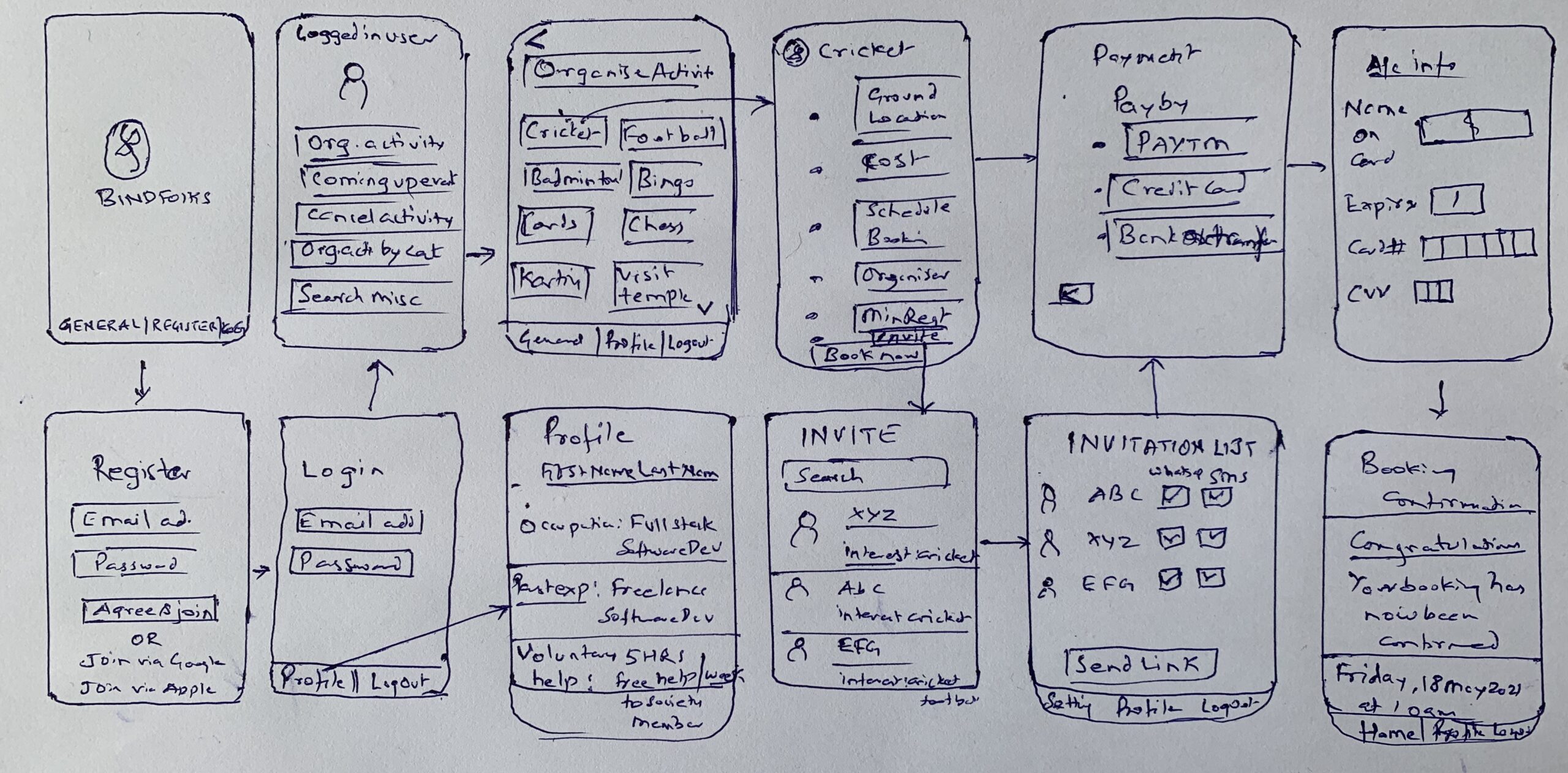
I used mind mapping to define user flows and relationships between key features, followed by affinity mapping to synthesise insights and organise ideas into coherent themes. These outputs were translated into low-fidelity designs, created using pen and paper, allowing for rapid exploration and iteration without premature visual constraints.
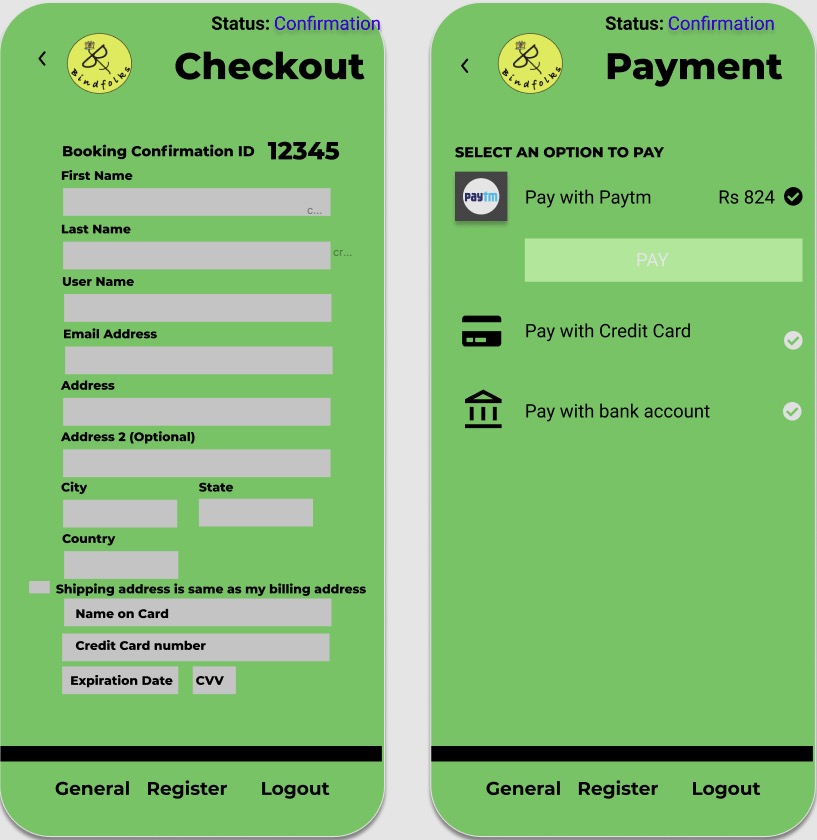
Once the foundational structure and flow were validated, I progressed to high-fidelity digital prototyping using Figma. This stage focused on refining interaction patterns, visual hierarchy, and overall usability to accurately represent the final user interface and deliver a realistic look and feel aligned with end-user expectations.

Feedback was crucial
Through five iterative design cycles, incorporating continuous user feedback, the overall solution became significantly clearer and more focused. Each iteration helped refine the core purpose of the application—clarifying what the primary objectives were, what users truly needed, and how those needs should be translated into design solutions. These principles guided decision-making at every stage of the process.
The central goal of the product was to strengthen social connections among elderly residents by encouraging participation in enjoyable, accessible, and engaging activities. To support this, all activities and events were consolidated into a single, centralised platform, enabling seniors to easily discover, access, and book activities with minimal assistance.
During usability feedback sessions, several elderly users expressed discomfort with organising activities due to limited experience and confidence. In response, an “Organizer/Guide” feature was introduced into the prototype, allowing designated individuals to manage and coordinate activities on behalf of participants—significantly reducing friction and anxiety for users.
To improve usability and reduce cognitive load, certain secondary options were removed from the main landing page, while others were relocated into a hamburger menu, ensuring they remained accessible without overwhelming users. The resulting design demonstrated a substantial improvement over the initial concepts, delivering a cleaner, more intuitive, and purpose-driven user experience.
Results
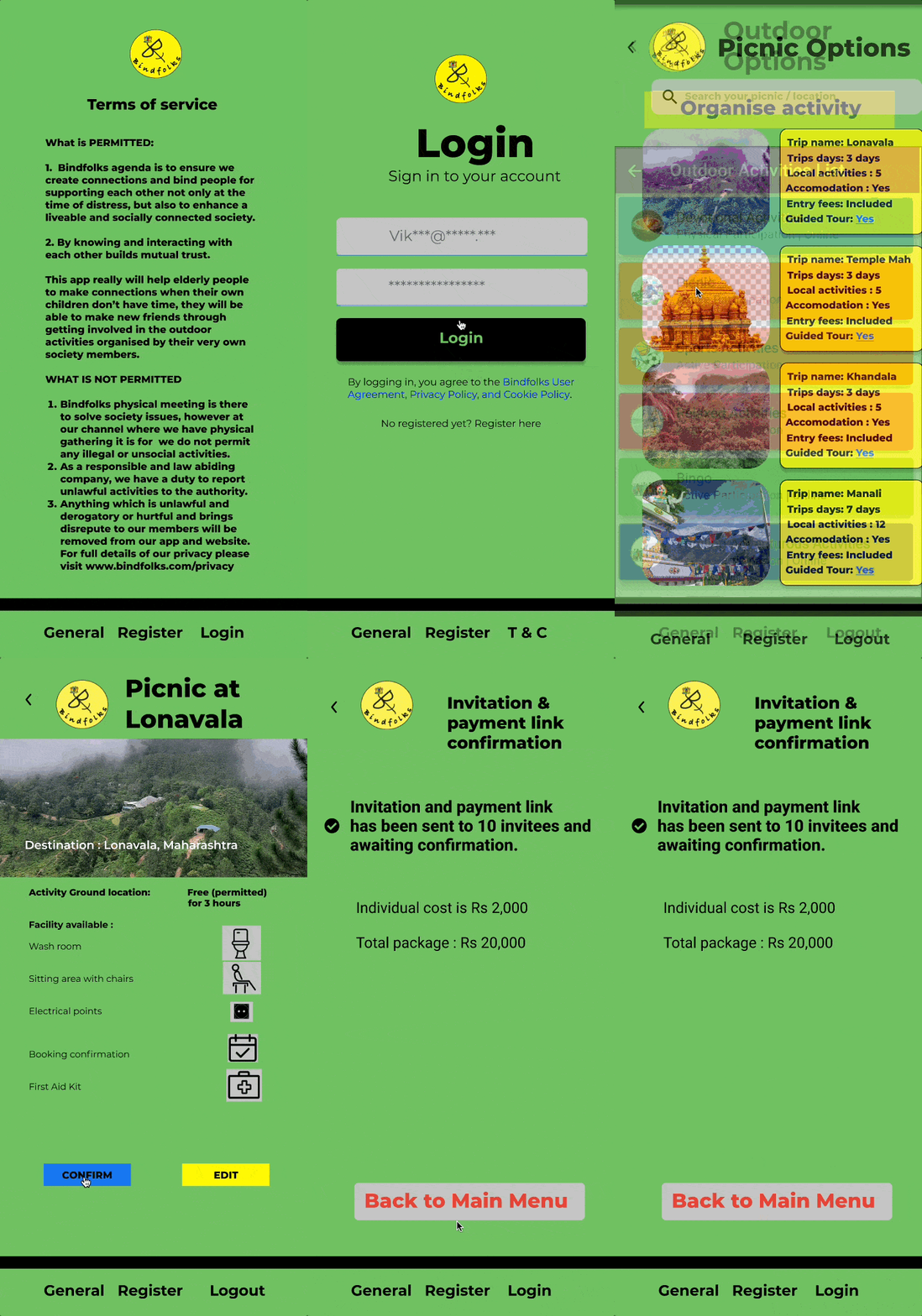
The core value of the application lies in its feature set, designed to provide seniors with a friction-free, intuitive user experience that allows them to easily navigate, search, and act on relevant results. Beyond discovery, the platform actively encourages users to contribute activity details—such as low-cost options, enriching experiences, and safe, accessible locations—fostering a sense of ownership and community participation.
The application also enables users to invite other members and connect around shared interests within a single, unified interface, further strengthening social engagement. For added convenience and accessibility, multiple secure digital payment options were incorporated, allowing users to complete transactions confidently and independently.
Despite challenges and delays caused by government restrictions during the pandemic, the project successfully met its core objectives. The application has since progressed into production, validating both the design approach and the underlying problem-solution fit.
